How to write Etsy tags that get found
You get 13 tags of up to 20 characters each. Here is how to spend them on the phrases buyers really type, without wasting any on repeats.


On this page
Tags are one of the main ways Etsy matches your listing to what a shopper types. Every listing gets 13 tags, and each tag can be up to 20 characters. That is not much space, so every tag should earn its place. This post covers how to choose them, how to fit useful phrases into 20 characters, and the common ways sellers waste tags.
How Etsy uses your tags
When a shopper searches, Etsy looks for listings whose title, tags, category and attributes match the words in the search. Tags are where you can add the phrases that do not fit naturally into the title: other names for the product, the style, the occasion, who it is for.
Two things follow from that:
- A tag is a phrase, not just a word. “frog shirt” is more useful than “frog” and “shirt” as two separate tags, because it matches what people type.
- Your category and attributes already count. If the listing is in the T-shirts category and has the color attribute set, you gain little by spending tags on “tshirt” or “green”.
Always use all 13
An empty tag slot is a search phrase you have chosen not to be found for. There is no penalty for using all of them, and no reason to save any. If you are struggling to reach 13, that is usually a sign you are thinking only about what the design is, and not about who would buy it and why.
Working inside 20 characters
Twenty characters includes spaces. That is enough for two or three words, which is exactly the length of most real searches. Some habits that help:
- Drop filler words. “shirt for frog lovers” is 21 characters and will not fit; “frog lover shirt” is 16.
- Use the shopper’s word, not yours. “tee” and “shirt” are both common. Use one in the title and the other in a tag.
- Do not cut words in half. A truncated phrase like “cottagecore aesthet” matches nothing useful. Pick a shorter phrase instead.
- Keep to letters and spaces. Etsy tags allow only a limited set of characters, so leave out symbols and emoji.
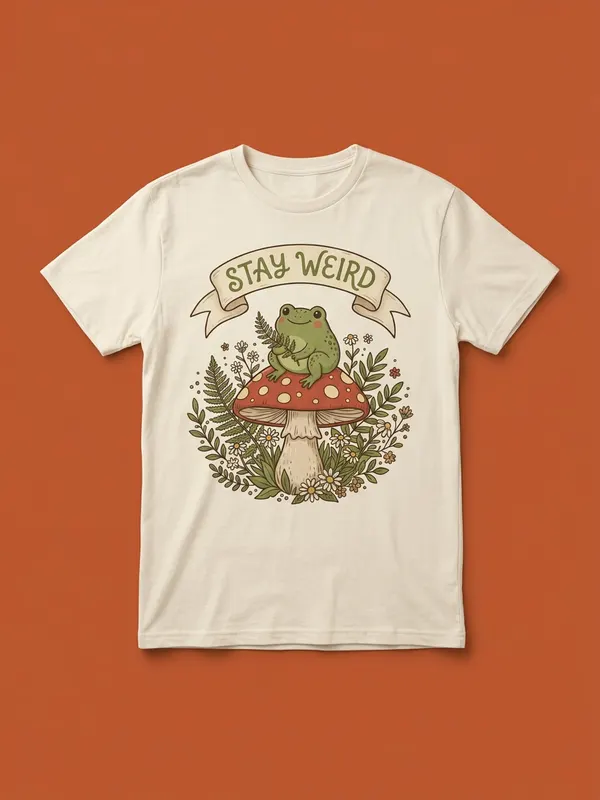
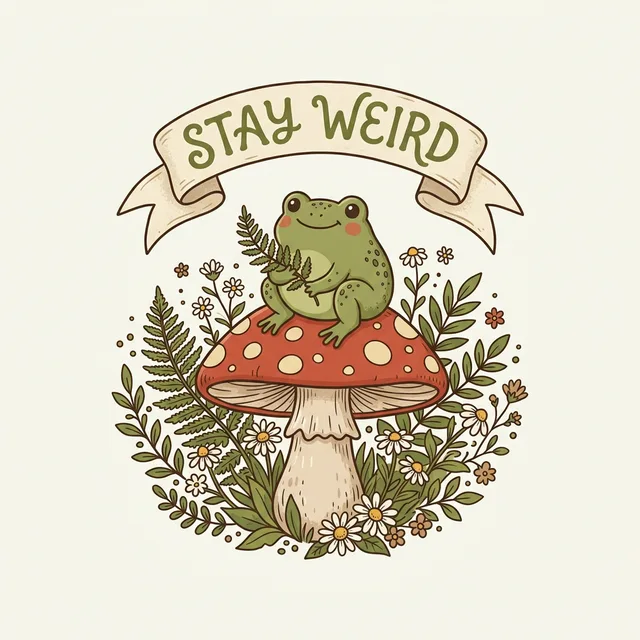
Here is a full set of 13 for the frog design, with the character count of each:
- frog shirt10
- cottagecore shirt17
- mushroom tee12
- goblincore clothing19
- stay weird shirt16
- frog lover gift15
- quirky frog tee15
- forest frog shirt17
- toadstool shirt15
- nature lover gift17
- whimsical tee13
- gift for her12
- oversized graphic17
Why long-tail phrases win
A “long-tail” phrase is a more specific search, usually three words or more. Fewer people search for “cottagecore frog shirt” than for “shirt”, but the people who do are much closer to buying, and far fewer listings are a strong match. For a small shop, being one of a few hundred good matches for a specific phrase is worth more than being one of hundreds of thousands for a broad one.
A good tag list mixes the two: a few broader phrases that describe the product, and several specific ones that describe this design.
Don’t repeat the category or yourself
The most common waste is spending tags on words the listing already has:
- The category. If the listing sits in the T-shirt category, a bare “t shirt” tag adds little.
- Attributes. Colors, sizes and materials you have set as attributes are already searchable.
- Plurals and spellings. Etsy’s search generally handles simple plurals, so “frog shirt” and “frog shirts” in two tags is mostly a wasted slot.
- The same idea twice. “frog gift” and “gift frog” are the same tag in different clothes.
Seasonal and gift tags
Many print-on-demand sales are gifts, and gift searches peak around holidays. A design that suits Mother’s Day, Christmas, a birthday or a teacher’s end-of-year gift can carry one or two occasion tags all year, and you can swap in a more specific one, such as “christmas gift mom”, in the weeks before the holiday. Keep it honest: only tag occasions the design really fits. A tag that brings the wrong visitors does not help, because they do not buy.
Tags that get listings taken down
Never use brand names, character names, sports teams, celebrities or famous slogans in tags, even when the design is “inspired by” them. Tags are text that rights holders can search for. If someone would only find your listing by typing a brand, the listing is a risk. Our post on staying clear of trademarks goes into detail.
Review tags, don’t set and forget
Etsy’s shop stats show which search terms brought visitors to a listing. Every month or two, look at your best sellers: if a phrase you did not tag keeps showing up, add it in place of a tag that brings nothing. And when a new style word starts appearing in searches, consider whether it describes your existing designs honestly. If it does, it is worth a slot.